
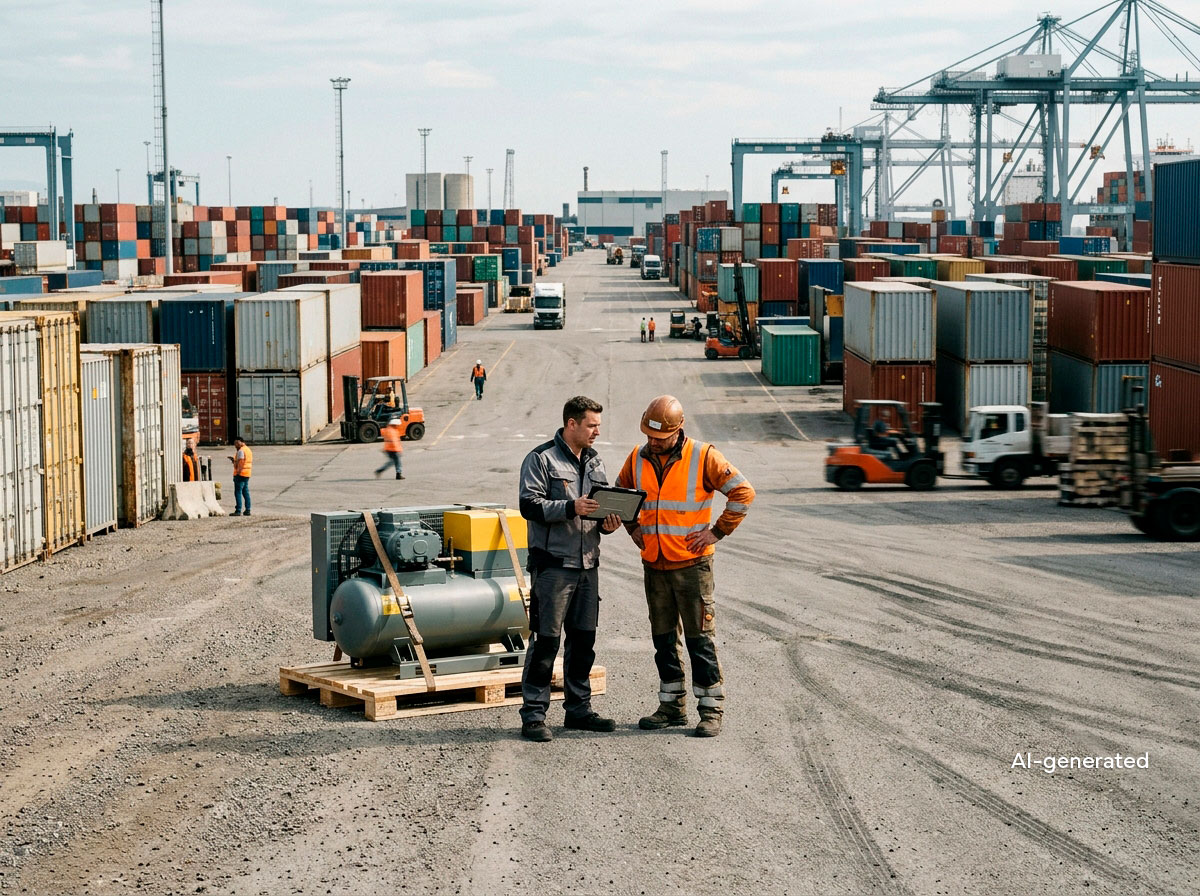
The sales team has done its job. The product is the best on the market, the price is competitive, the contract has been signed. But competitiveness in the value chain does not come from one good deal: six months later, the customer is dissatisfied because the local service partner did not know how to install or maintain the device correctly. One bad experience quickly circulates, and the next deal is not made.
No one asks if the product was good. The question is why it didn’t work.
Competitiveness in the value chain is only as strong as its weakest link
The content of the Subcontracting Trade Fair repeats the idea that Finnish competitiveness is built on the entire value chain, not on the success of a single company. Sandvik, the main partner of the fair, has brought up the same message in its own speech: networks and partnerships determine competitiveness and are part of risk management. The programme also includes a session on the topic, “Stop Buying Technology. Start Engineering Resilience”, which reminds us that competitiveness is not created by technology purchases alone.
11 percent of turnover is lost due to unplanned downtime, and 23 percent of these are due to a lack of skills and operating errors, not equipment failure. This doesn’t just apply to your own staff. It applies equally to dealers and service partners who represent the brand in the eyes of the customer.
Source: Siemens / 2024

Resilience is built on competence, not backup systems
“Stop Buying Technology. Start Engineering Resilience” is also perfect for training. A resilient organization is not dependent on the tacit knowledge of one expert or on the same person always being there to train a new employee or partner. When competence is structured, documented and available systematically, the organization is better able to withstand personnel changes and growing volumes.
CompetenceX’s X Academy model has been built to meet this need. The company brings product knowledge, CompetenceX brings pedagogy, platform and revenue model. The end result is a branded training package that covers the entire network and does not disappear with personnel changes.
Competitiveness in the value chain extends through the entire network
In practice, value chain thinking means that expertise must extend beyond one’s own organisation: all the way to retailers, service partners and end customers. As a result, competitiveness in the value chain changes from a one-off cost of training to a continuous competitive advantage, and in some cases also a new source of income.
Eyes on the Subcontracting Trade Fair
When we talk about networks and competitiveness at the fair, it is also worth asking: does the expertise go through the entire value chain, or does it just stay in-house? See you at the Subcontracting Fair 29.9.–1.10. in Tampere, or book a 30-minute sparring session in advance.
Frequently Asked Questions
Why doesn’t competitiveness in the value chain depend only on one’s own company?
Finnish competitiveness is built on the entire value chain, not on the success of a single company. Dealers and service partners represent the brand in the eyes of the customer, so their expertise has a direct impact on what kind of experience the customer ultimately gets.
What does “Stop Buying Technology. Start Engineering Resilience” mean for education?
A resilient organization is not dependent on the tacit knowledge of a single expert. When competence is structured, documented and available systematically, the organization is more resilient to personnel changes and growing volumes, and does not need just a technology purchase to cope with changes.
What is X Academy, and how does it differ from regular product training?
X Academy is CompetenceX’s model, in which the company brings its own product knowledge and CompetenceX brings the pedagogy, platform and revenue model. The end result is a branded training package that covers the entire network, which does not disappear with personnel changes and can also serve as a new source of income.
How should expertise be taken through the entire value chain?
Expertise must extend beyond one’s own organisation: all the way to resellers, service partners and end customers. In this way, training changes from a one-off cost to a continuous competitive advantage.