
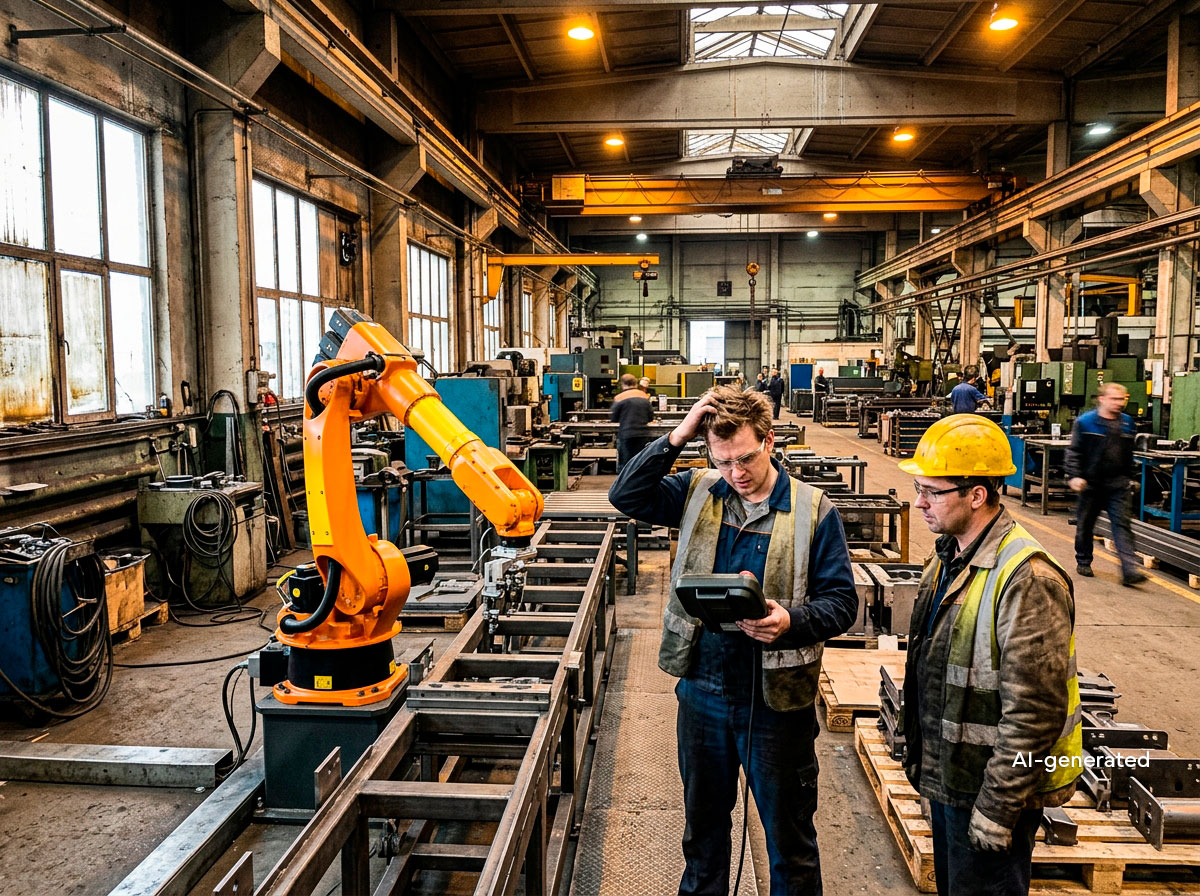
A new robot arrives on the production line. At first, the implementation of robotics seems easy: the installation is successful, the test run looks good, everyone celebrates. Then the robot is brought into real production, and during the first week, it stops three times because the operator did not know how to solve the error situation. Each stop costs thousands of euros in lost production time.
No one blames the robot. In the worst case, everyone blames each other.
A quarter of downtime is due to a lack of expertise, not equipment
In the programme of the Subcontracting Fair, robotics will have its own, three-hour theme “Robotics as a workplace 2026”. The title is apt, because robotics is not just a technical investment. It changes what kind of expertise is needed at the floor level. The same applies to the fair’s other production technology topic, 3D printing, an example of which in the programme is the modelling and printing of an aluminium engine housing into an industrial spare part.
23 percent of unplanned downtime is due to a lack of skills and operating errors, not equipment failure. In other words, the introduction of robotics does not end with installation, but it is only the beginning. When robots, automation or new manufacturing methods such as 3D printing are introduced into production, this risk does not disappear with the investment. The more complex the device or process, the more important it is that the user knows how to do the right thing from day one.
Source: Siemens / 2024
Robotics can be deployed at the device, not in the classroom
One concrete way to answer this is to physically bring the training to where the work takes place. In the solutions of the CompetenceX platform , this means a QR code directly on the side of the device. The employee scans the code with their phone at the machine and can access exactly the content that is required for the use or maintenance of the device in question. This is especially relevant in the context of robotics and new production technology, where operating errors can be both expensive and a safety risk.
Many technical manufacturers recognize the same problem. There is a lot of expertise in a new device or process, but without a clear framework, training easily turns into informal discussion and there is not enough time to go through everything. On the CompetenceX platform, performance can be monitored in real time, and each pass leaves a digital certificate. The model has already been tested in the cold chain industry, for example, in the implementation of a special system.
Deploying robotics costs more than the device itself
When investing in robotics or new manufacturing technology in production, it is worth reserving resources for the transfer of know-how, not just for the commissioning of the equipment. Otherwise, the 23 per cent downtime risk of the skills gap will not disappear with the investment. It will just be transferred to a new form.
Eyes on the Subcontracting Trade Fair
When investing in robotics or new manufacturing technology in production, it is also worth asking: do the users have a plan for how the device will be taken into use safely and efficiently? See you at the Subcontracting Fair 29.9.–1.10. in Tampere, or book a 30-minute sparring session in advance.
Frequently Asked Questions
Why does the introduction of robotics often fail because of competence, not because of the device?
23 percent of unplanned downtime is due to a lack of expertise and operating errors, not equipment failure. When robots or new manufacturing technology are introduced into production, the user’s expertise often matters more than the technical characteristics of the device itself.
What does a QR code on the side of the device do in practice?
It takes the employee directly to the training content that applies to the device in question. The employee scans the code with their phone in front of the computer and gets an answer exactly when they need it, without having to search for information in a separate portal or manual.
What are the benefits of using the CompetenceX platform for robotics deployment?
Performances can be tracked in real time, and each pass leaves a digital certificate. The model has already been tested in the cold chain industry, for example, in the implementation of a special system, and it is equally suitable for training in robotics and new production technology.
How should you think about the costs of a robotics investment?
In addition to the purchase price of the equipment, it is worth reserving resources for the transfer of expertise. Otherwise, the downtime risk of the competence gap will not disappear with the investment, but will be transferred to a new form.