
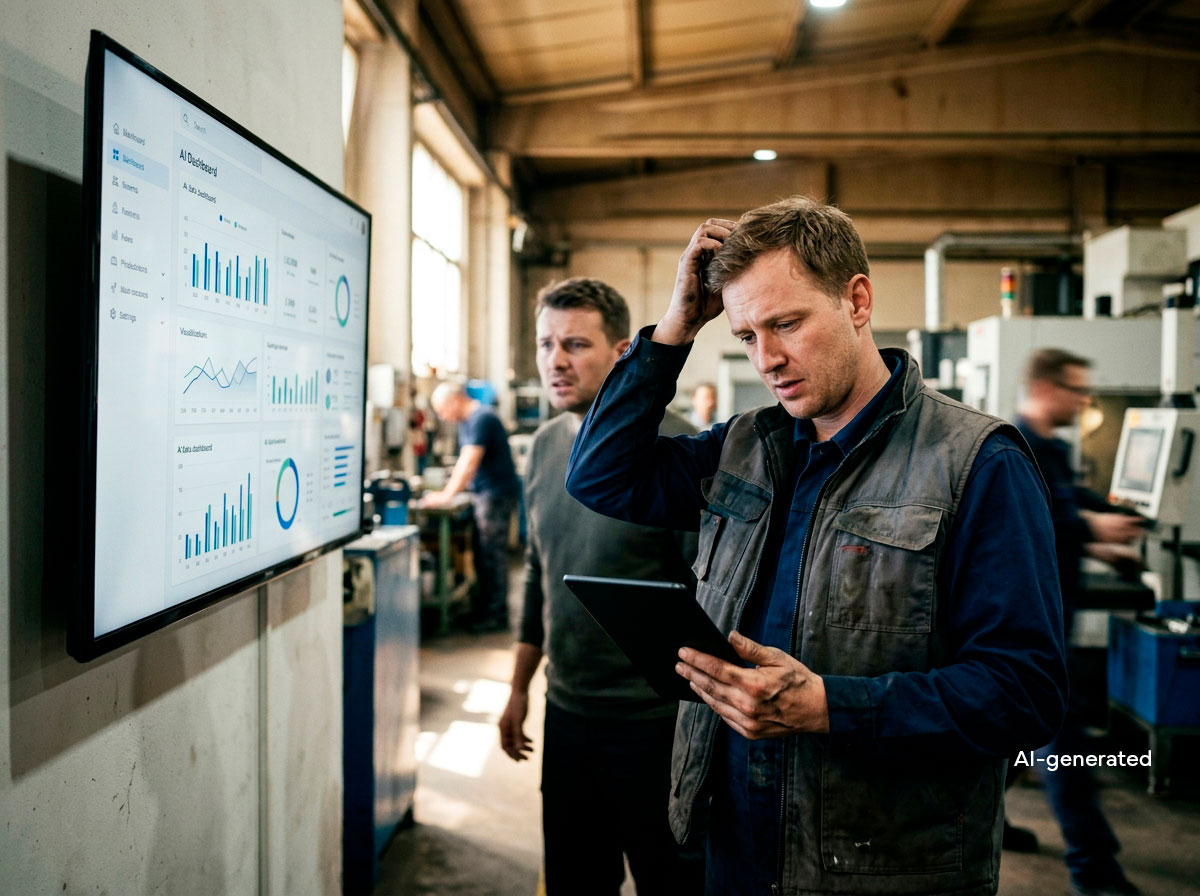
The investment decision has been made. A new software that utilizes artificial intelligence is acquired for the factory. The demo has been seen, everyone seemed impressed. But AI in deployment always requires more than a working demo: when the system is finally deployed, it often turns out that no one really knows how to use it in everyday life. One learns the hard way, another goes around the system completely and does things the old way, and a third waits for someone else to figure out how it works first.
Six months later, perhaps a tenth of its potential is spent on an expensive investment.
AI in deployment requires more than a demo
In the programme of the Subcontracting Fair, artificial intelligence and digitalisation will be highlighted in several sessions. Topics include how artificial intelligence is revolutionising design, how algorithms are used in decision-making, and how software is solving obstacles to growth. The discussion almost always focuses on the technology itself. Less often is there talk about whether the staff actually knows how to implement it.
This is not a small detail. 48% of companies say directly that better training would significantly improve the adoption of new technology. In other words, almost every second company already knows that it is their own expertise that is the bottleneck, not the technology itself.
Source: Siemens / 2024
Training cannot be a PowerPoint thought out after the fact
Many technical manufacturers recognise the same pattern. Expertise is at its peak in-house, but no one has time to formulate proper training on it. The material is often created as a slide show put together the night before, and a slide show alone is not yet learning. At the same time, when artificial intelligence and new digital features are added to products and processes, the gap between competence and technology widens even more.
Kuopio-based Mobie has built a solution for this with its CompetenceX platform, where training is taken to where the work takes place. For example, a QR code on the side of the device takes the user directly to the right content, not to a separate portal or a one-time presentation. The employee scans the code with their phone at the exact moment they need an answer, not looking for it later somewhere in the depths of the intranet.
The same logic also applies to the creation of training. Artificial intelligence itself speeds up content production significantly. Existing material, such as manuals and technical documents, can be used to build a functional training package in a fraction of the time it has previously taken.
Artificial intelligence in deployment: utilisation rate, not purchase price as a measure
When investing in artificial intelligence or new digital technology in production, it would be worthwhile to reserve resources to support its deployment, not just for the purchase of the device or system itself. Otherwise, the 48 per cent skills gap will not be solved with the investment. It will only be transferred to a new form, at a higher cost.
Eyes on the Subcontracting Trade Fair
When artificial intelligence and digitalisation are discussed at the fair, it is also worth asking: does the organisation have a plan for how to really learn to use the new technology? See you at the Subcontracting Fair 29.9.–1.10. in Tampere, or book a 30-minute sparring session in advance.